The next elections will be in 2029. It will be the 50 year anniversary of the Elections as the first ones took place in 1979. EU countries have elections on different days. For example, the Netherlands has elections on Thursday, and France has elections on Sunday.
How do European Elections work?
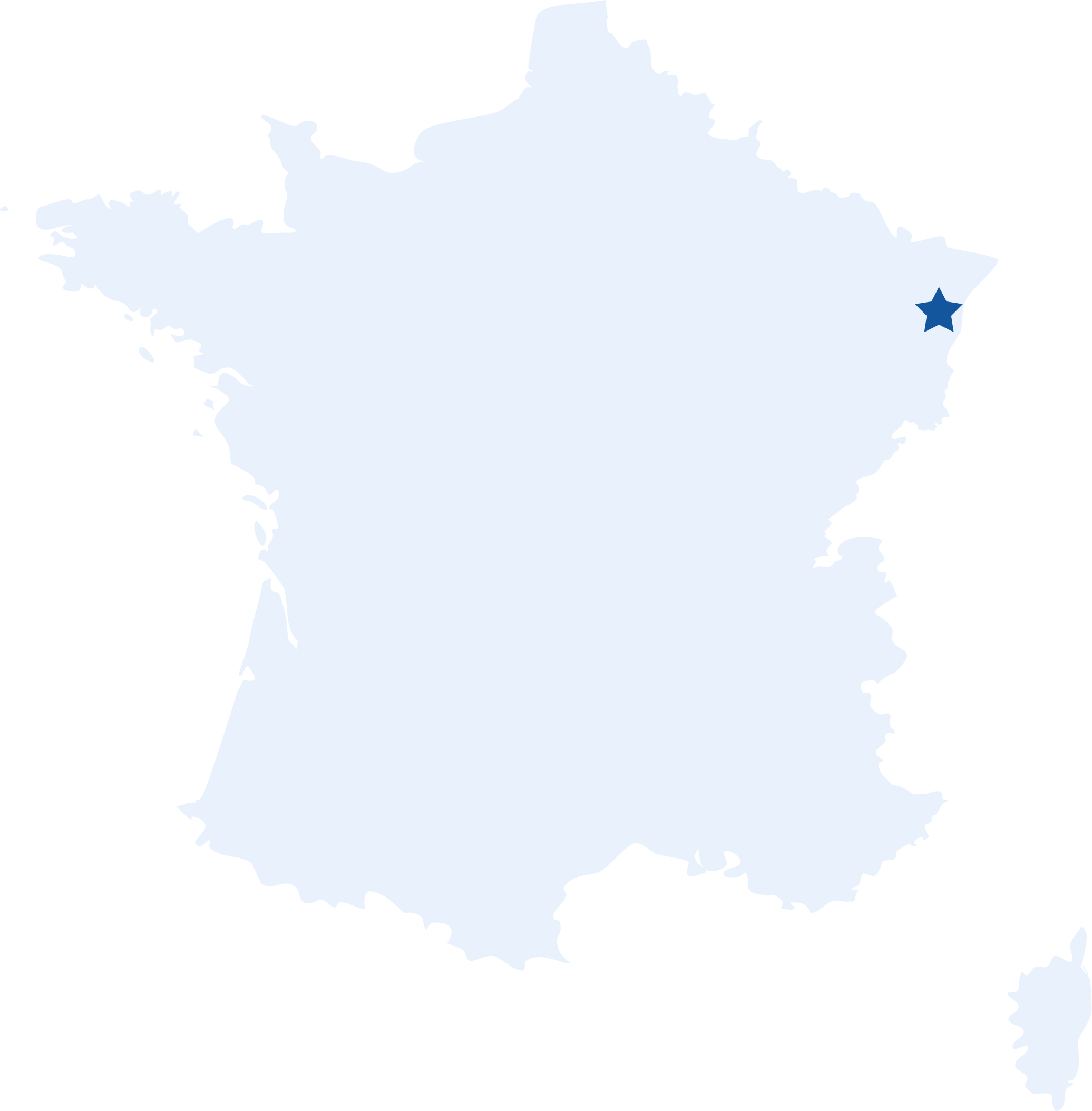
Every five years, people across the European Union vote for Members of the European Parliament (MEPs). The European Parliament has its headquarters in Strasbourg, France, while most meetings take place in Brussels, Belgium. The elections are a chance for you to have your say on the future of Europe. Even though it may seem complicated, this is a direct way to speak up about the things that matter to you, like climate change and digital rights.
Table of Contents
- 01 Key Information
- 02 Everyday Example
- 03 Good to Know
- 04 FAQ
- 05 Quiz
- 06 Summary
Everyday Example
Sophie, a 20-year-old student in Portugal, is voting in the European Elections at her local school. She chooses from a list of parties running in her region. The people elected will represent her interests in Brussels and Strasbourg, including her concerns about affordable education and action on climate change. This is how individual votes from millions of people come together to decide on the future of the EU.
Good to Know
Το γνωρίζατε; Κάθε πολίτης της ΕΕ μπορεί να ψηφίσει εκεί όπου ζει – ακόμα και αν δεν είναι η χώρα καταγωγής του (εφόσον είναι εγγεγραμμένος)!
Τι μπορείτε να κάνετε; Ελέγξτε αν είστε εγγεγραμμένοι για να ψηφίσετε στη χώρα σας. Μάθετε για τους υποψηφίους και τις θέσεις τους. Ενθαρρύνετε τους φίλους και την οικογένειά σας να ψηφίσουν επίσης!
FAQ
Is voting in EU elections the same in every country?
The core principles are the same, but each country manages the election slightly differently (e.g. voting age or election day).
Do all countries vote for the same number of MEPs?
No. Countries get different numbers of MEPs based on their population. Bigger countries have more seats, smaller countries have fewer.
Do MEPs make laws?
Yes, together with the Council of the EU, after the European Commission proposed them. The system has three major players:
Quiz
Which of these can MEPs NOT do?
-
MEPs only vote on laws but cannot propose them directly – that’s the job of the European Commission.
How often do European Elections take place?
How old must you be to vote in most EU countries?
-
18 years, there are exceptions in e.g. Austria and Belgium (16+) or in Greece (17+)
Summary
-
European Elections: This is when EU citizens choose their representatives in the European Parliament.
-
Voting lets people have a say in important issues like the environment, the economy, and rights.
-
Every country holds elections using the same EU rules to make sure they are fair and democratic.