it Back

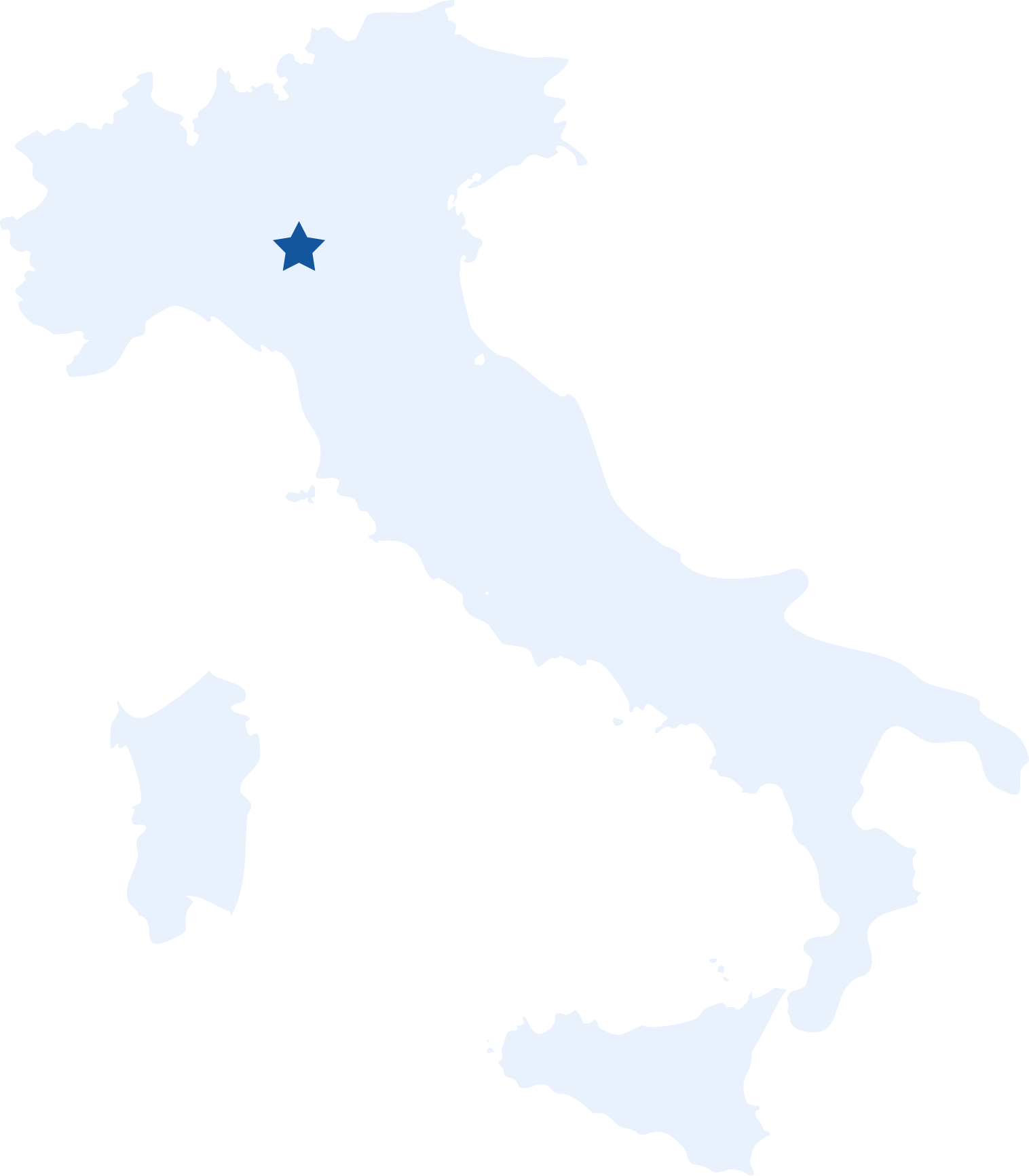
Parma, Italy The European Food Safety Authority (EFSA)

How does the EU ensure food safety and quality?

When you buy food in the EU, you can trust it is safe, healthy, and of high quality. The EU applies one of the world’s most comprehensive food-safety systems — covering every stage from farming and production to transport, sale, and your kitchen table. This approach is known as the “Farm to Fork” strategy, a key part of the European Green Deal. It ensures that every food product sold in the EU can be traced, checked, and trusted, while promoting sustainable farming and protecting consumers’ health.

Table of Contents

  1. 01 Key Information
  2. 02 Everyday Example
  3. 03 Good to Know
  4. 04 FAQ
  5. 05 Quiz
  6. 06 Summary
  7. 07 Links

What is it?

The EU food safety and quality framework sets rules for:

  • Food hygiene (how food is produced, handled, and stored).
  • Labeling and consumer information (what’s in the food and where it comes from).
  • Traceability and monitoring (tracking food along every step of the chain).
  • Quality schemes that protect traditional and regional products (like PDO, PGI, and TSG labels).

Together, these rules form the foundation of the Farm to Fork system — ensuring that food placed on the EU market is safe, sustainable, and transparent.

1 / 4

Who does it affect?

  • Farmers and producers, who must follow hygiene, animal welfare, and environmental standards.
  • Food processors and retailers, who must ensure labeling accuracy and product traceability.
  • Consumers, who benefit from safe food and reliable information on packaging.
  • Authorities, who conduct inspections and testing across the supply chain.
2 / 4

Why does it matter?

Food safety laws protect more than just health — they protect trust.
They ensure that:

  • Consumers can buy food with confidence.
  • Companies compete fairly across the single market.
  • Traditional products and regional foods are preserved.
  • Europe leads globally in sustainable and ethical food systems.
3 / 4

How does it work?

The EU follows a “farm to fork” approach, meaning safety is ensured at every step:

  1. Farming: Animals are raised and crops are grown under strict hygiene, pesticide, and welfare rules.
  2. Processing: Food factories must be approved and regularly inspected.
  3. Transport: Products must be stored and moved under clean, temperature-controlled conditions.
  4. Retail & Catering: Shops and restaurants must keep traceable records and meet hygiene standards.
  5. Consumer: Clear labeling helps you make informed, safe choices.

If any problem arises (like contamination), the product can be traced and withdrawn quickly through the EU Rapid Alert System for Food and Feed (RASFF).

4 / 4

Everyday Example

You buy strawberries at a supermarket in Sweden. The label says they were grown in Spain.
Thanks to EU rules, you can:

  • See the origin and producer on the label.
  • Know that the farm followed EU pesticide limits and worker-safety standards.
  • Trust that they were inspected during transport and stored correctly.

If any batch is found unsafe, it can be traced back to its source and removed from shelves across Europe within hours.


Good to Know

Case Study: “From Dairy Farm to Yogurt Cup”

Let’s follow a simple food product — a cup of yogurt — through the EU’s farm to fork journey:

  1. Farm: The dairy farmer follows EU rules on animal welfare and hygiene. Milk is tested for bacteria before leaving the farm.
  2. Processing Plant: The milk goes to an approved factory. The facility must comply with food-safety management systems (HACCP).
  3. Packaging: The yogurt is sealed with ingredients and nutritional information listed in clear, readable labels — including allergens.
  4. Distribution: Trucks transport it at controlled temperatures, monitored through digital systems.
  5. Store & Consumer: The shop must store it properly. You can scan the QR code to check its origin, farm certification, and expiry date.

💡 Result: From a cow in France to a supermarket in Sweden, every step is checked, recorded, and transparent.


  • Fun Fact

    🥦 The EU has one of the strictest food-safety regimes in the world — covering over 450 million consumers.
    🔬 The European Food Safety Authority (EFSA), based in Parma (Italy), provides independent scientific advice on risks related to food and feed.
    🌱 The EU Organic Regulation (2018/848) sets stricter standards for organic food — banning synthetic pesticides, limiting antibiotics, and ensuring sustainable farming practices.

  • Did You Know?

    • Every food product sold in the EU must be traceable one step forward and one step back in the supply chain.
    • Traditional regional foods such as Feta, Parma Ham, or Champagne are protected by EU quality labels (PDO, PGI, TSG).
    • The EU regularly tests imported food to make sure it meets EU safety standards before entering the market.
    • Since 2021, new EU rules require origin labeling for more food categories — including meat, honey, and fruit.

FAQ

Is organic food treated differently?
Yes. Organic food follows stricter rules for production, labeling, and certification. The EU organic logo guarantees compliance with these standards.
Who checks food safety?
National inspection agencies in each EU country, coordinated by the European Commission and EFSA, perform thousands of checks each year.
What happens if unsafe food is found?
Through the RASFF system, the product is traced, recalled, and reported to all EU countries within 24 hours.
Does the EU ban local traditions?
No. Traditional and regional foods are protected, not banned — they just need to meet hygiene and safety rules.

Quiz

What does "from farm to fork" mean?

Which EU agency provides independent scientific advice on food safety?

Summary

  • EU food law ensures that everything you eat is safe, traceable, and accurately labeled.

  • The Farm to Fork approach protects consumers and supports sustainability.

  • EFSA and national authorities monitor risks and guarantee science-based safety.