- The CAP was first introduced in 1962, making it one of the EU’s oldest policies.
- Around 10 million farms exist in the EU, and CAP supports most of them.
- Without CAP, Europe might rely much more heavily on food imports, which could increase prices and reduce quality standards.
How does the EU support farmers and agriculture?
Farming is one of the oldest and most important jobs in Europe. Farmers grow our food, take care of the land, and keep rural areas alive.
To make sure farming remains sustainable and that Europe has enough safe, high-quality food, the EU created the Common Agricultural Policy (CAP). This is one of the EU’s oldest and most important policies. It supports farmers, protects the environment, and ensures fair food prices for consumers and sustainability.
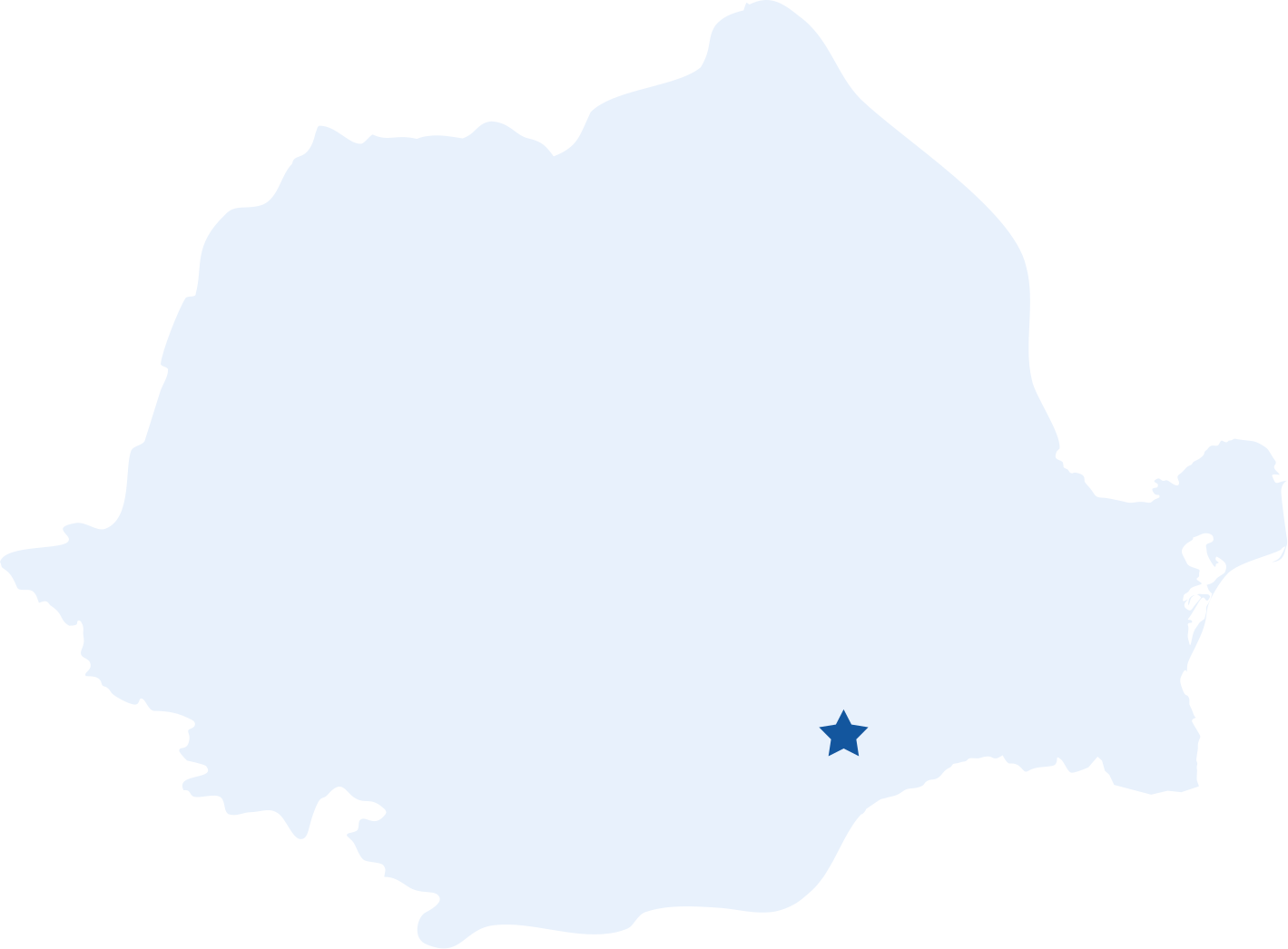
Romania, with its strong farming traditions and vast agricultural lands, benefits greatly from CAP funding. For example, CAP subsidies (amount of money given by a public body to help a business or industry) help Romanian farmers modernize equipment, compete fairly in the EU market, and maintain rural communities The National Rural Development Programme in Romania co-financed by the CAP has supported more than 100,000 farmers to modernize their practices and adapt to EU food and environmental standards.
Table of Contents
- 01 Key Information
- 02 Everyday Example
- 03 Good to Know
- 04 FAQ
- 05 Quiz
- 06 Summary
Everyday Example
– Direct Payments: A Romanian farmer growing wheat receives EU support so that even if world wheat prices fall, he can still cover costs and keep producing.
– Greening Measures: A vineyard in southern Romania plants hedges and trees around fields, helping bees and biodiversity – and receives CAP support for doing so.
– Rural Development: In a small village, CAP funds help build modern irrigation systems, making farming more efficient and saving water.
– Fair Food Prices: Thanks to CAP, the price of milk in Romania is kept at a reasonable level despite global market fluctuations.
Good to Know
FAQ
Why does farming need subsidies?
Because farming is unpredictable. Droughts, floods, or market changes can ruin a harvest. Subsidies give farmers stability.
Does CAP only benefit big farmers?
No. The CAP has special terms to support small and medium-sized farms, especially in Eastern Europe.
Why is the CAP linked to the environment?
Because farming has a big impact on nature. By linking subsidies to green practices, the EU ensures sustainability.
Do taxpayers pay for the CAP?
Yes, CAP is funded by the EU budget, which comes from member states. But in return, citizens benefit from stable, safe, and affordable food.
Quiz
What is the main purpose of the CAP?
-
The CAP also supports small and medium-sized farms
When did Romania start receiving CAP ?
-
Since 2007, when it joined the EU.
Why are farmers asked to follow green practices?
Summary
-
The CAP supports farmers with funding, training, and protection against market risks.
-
It helps ensure food is safe, affordable, and available for all citizens, promoting sustainability at the same time.
-
Romania benefits strongly from CAP because of its large farming sector.