pt Back

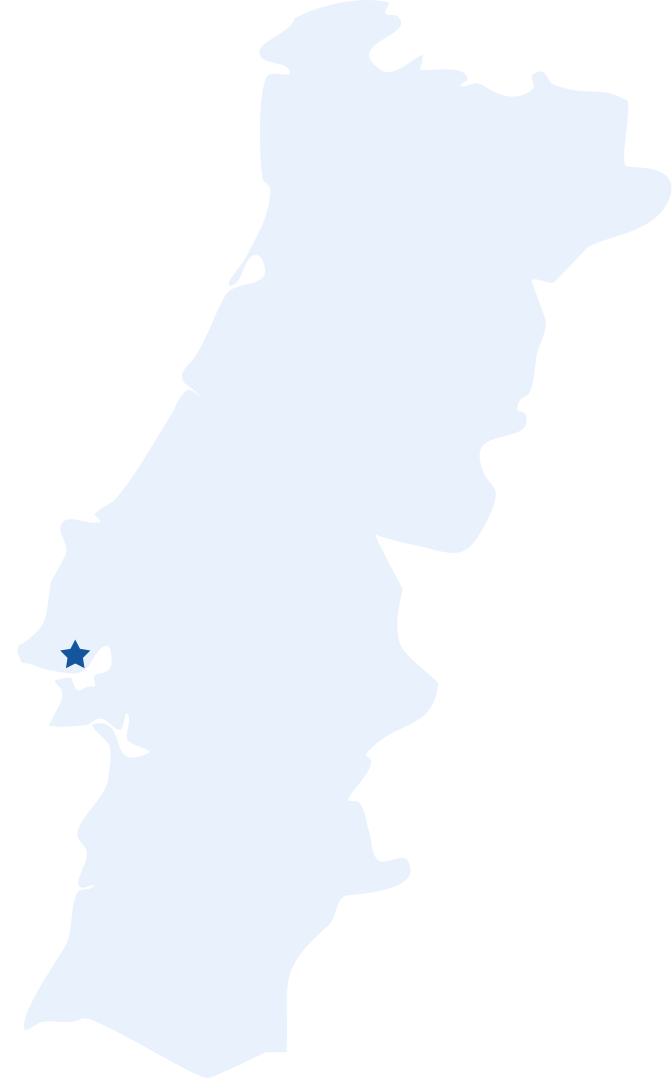
Lisbon, Portugal Treaty of Lisbon

What gives the EU its rules and powers?

The European Union (EU) is not a single country but a special partnership of 27 member states. To function in a proper way, the EU needs clear rules about what it can do, how it makes decisions, and how citizens are represented. These rules are not written in a single "constitution" like in some countries but are set out in treaties agreed upon by all member states. The most recent and most important of these is probably the Treaty of Lisbon, signed in Lisbon, Portugal, in December 2007 and came in force in December 2009. This treaty reshaped the EU by making it more democratic, more effective, and better prepared to face challenges like globalization, security threats, economical instability and climate change. Additionally, this Treaty aimed at covering the lack of a strong constitution that could make the enlargement of the EU easier. Understanding the Lisbon Treaty helps us see where the EU’s powers come from and how it works for its citizens.

Table of Contents

  1. 01 Key Information
  2. 02 Good to Know
  3. 03 FAQ
  4. 04 Quiz
  5. 05 Summary

What is this about?

The Treaty of Lisbon is an agreement between all EU countries. It sets out the EU’s powers, responsibilities, and how it is organised.

1 / 3

Who does it affect?

Everyone in the EU – citizens, businesses, and governments – because it shapes the laws that affect the daily lives of everyone in the EU.

2 / 3

Why is it important?

The EU wouldn’t have clear rules on how to make decisions, pass laws, or protect people’s rights without this treaty.

3 / 3

Good to Know

Before the Treaty of Lisbon, the EU worked under several different treaties, which made decision-making slower and more complicated.

What Can You Do?

  • Explore the European Citizens’ Initiative and see which causes are being promoted. You might find one to support.
  • Follow the work of your Members of the European Parliament (MEPs) – their powers were strengthened by the Lisbon Treaty.
  • Visit Lisbon to see where this historic agreement was signed.


FAQ

Does the EU have a Constitution?
No. Instead, it is governed by treaties agreed by all member states, with the Treaty of Lisbon being the most recent.
Can the Treaty of Lisbon be changed?
Yes, but only if all EU countries agree and ratify the changes.

Quiz

When did the Treaty of Lisbon enter into force?

  1. Unterzeichnet wurde er 2007, aber in Kraft getreten ist er erst im Dezember 2009.

Which EU institution gained more power through the Lisbon Treaty?

  1. Enhanced ability to pass laws in cooperation with the Council of the EU

What is the European Citizens' Initiative?

  1. It was introduced through the Lisbon Treaty

Summary

  • The Treaty of Lisbon is the EU's main rulebook.

  • It explains how the EU makes decisions and what powers it has.

  • It gives more power to citizens, protects rights, and improves cooperation between countries.