- The Charter includes 54 articles covering a wide range of rights.
- Latvia hosts regular EU discussions on democracy and rights in the Baltic region.
- The Charter is not just symbolic — it has real legal power and is used in court cases.
How does the EU protect fundamental rights?
The European Union is not just about trade, the economy, or open borders. At its core, the EU is a community of values. These values include human dignity, freedom, democracy, equality, rule of law, and respect for human rights.
But values are only meaningful if they are protected by law and special mechanisms that ensure their protection. That is why the EU has the Charter of Fundamental Rights of the European Union, a legal text that guarantees rights for all people in the EU.
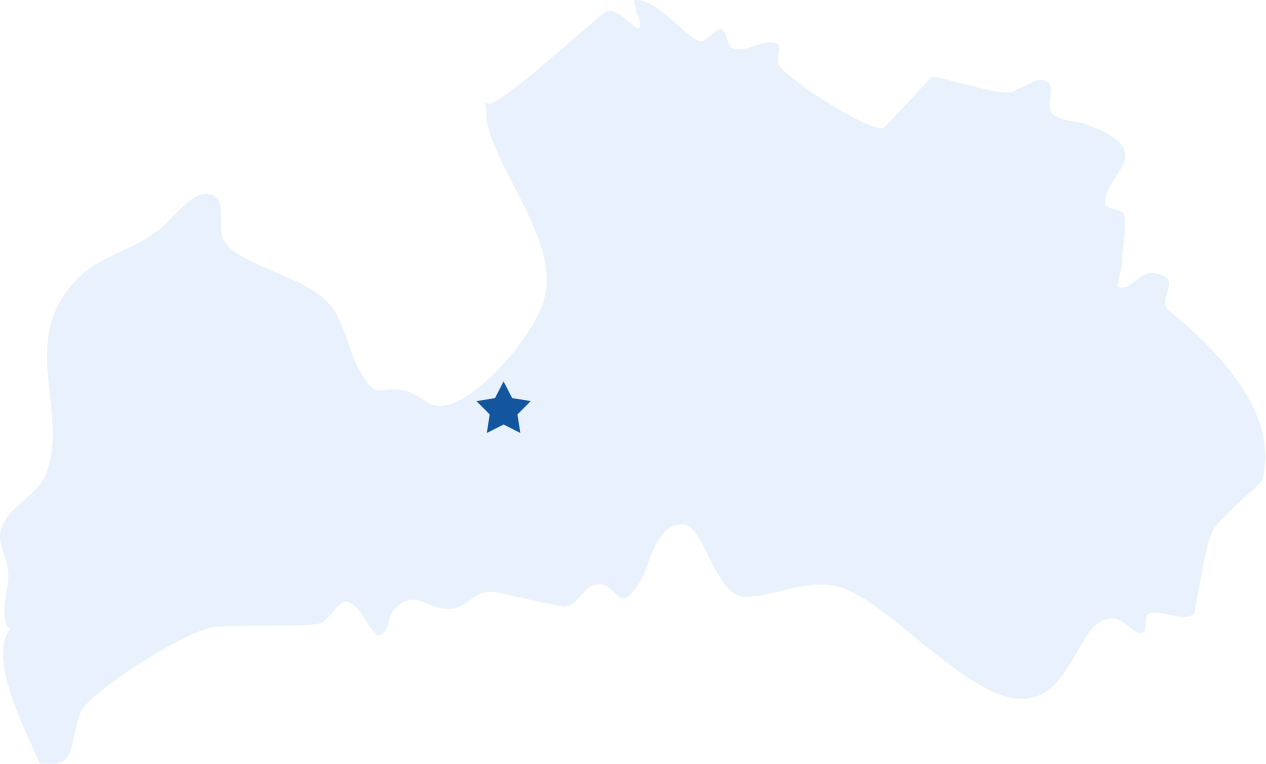
Since joining in 2004, Latvia has strongly supported EU human rights policies. Riga, its capital, has become an active center for dialogue on democracy, minority rights, and European values, making it the perfect setting for this topic.
Table of Contents
- 01 Key Information
- 02 Everyday Example
- 03 Good to Know
- 04 FAQ
- 05 Quiz
- 06 Summary
Everyday Example
- Non-Discrimination: Anna, a Latvian nurse working in Germany, discovers she earns less than local colleagues for the same job. Thanks to EU equality laws and the Charter of Fundamental Rights, Anna can challenge this unfair treatment — her right to equal pay is protected across all EU countries.
- Privacy Rights: Martins shares photos on social media, but a company uses them for advertising without consent. Under the EU Charter and data protection laws, he has the right to demand removal and protect his personal data — online privacy is a fundamental right for everyone.
- Workers’ Rights: In a factory in Riga, Maria notices unsafe conditions that could harm workers. Thanks to the Charter’s right to fair and safe working conditions, she can report the issue, and her employer must make improvements. EU law ensures her health and safety come first.
- Voting Rights: Tomas, a Lithuanian student living in Latvia, wants to vote in local elections. Under the EU Charter, he can register and vote where he lives — just like any local citizen. The right to participate in democratic life follows all EU citizens wherever they are.
Good to Know
What Can You Do?
- Learn about your rights by exploring the Charter online.
- If you think your EU rights are violated, contact your national ombudsman or the European Ombudsman.
- Participate in EU elections — democracy is one of your protected rights through which you can influence and shape EU policies.
- Spread awareness about rights through schools, youth projects, or NGOs.
FAQ
Does the Charter apply in every situation?
It applies when EU law is involved (e.g., data protection, cross-border work).
Can I go to court if my rights are violated?
Yes, you can go to national courts, and they may refer your case to the European Court of Justice.
Is this the same as the European Convention on Human Rights (ECHR)?
No. The ECHR is part of the Council of Europe, not the EU. But both protect similar rights, and EU countries must respect both.
Do non-EU citizens in the EU also benefit from the Charter?
Yes. Many rights, such as dignity and fair treatment, apply to all people in the EU.
Quiz
Since when has the Charter of Fundamental Rights been legally binding?
-
when the Lisbon Treaty came into effect.
Which institution ensures EU laws respect the Charter?
-
though the Commission and Parliament also play a role in the protection of the Charter.
What are the six categories of rights in the Charter?
Summary
-
The EU Charter of Fundamental Rights protects dignity, freedoms, and equality.
-
It is legally binding for EU countries and institutions.
-
Latvia is a strong example of integrating EU human rights protections at national level.