ie Back

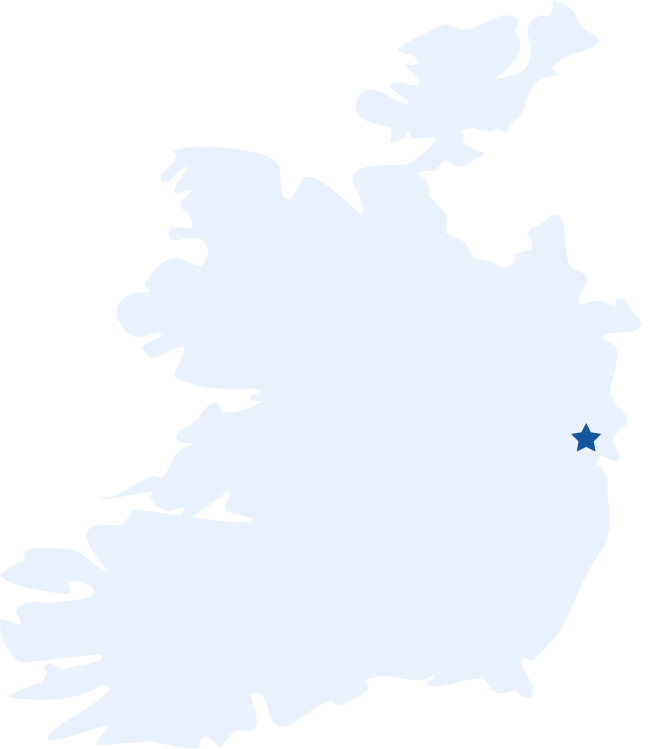
Dublin, Ireland The Dublin III Regulation

How is the EU dealing with migration?

Migration and asylum are among the most discussed issues in Europe today. Millions of people move to the EU each year — some for work or study, others fleeing war, persecution, or environmental crises. The EU aims to balance humanitarian protection and secure border management through a shared legal framework. The goal is to ensure that everyone seeking protection in Europe is treated fairly, humanely, and in accordance with international law, while helping member states manage migration in an orderly and coordinated way.

Table of Contents

  1. 01 Key Information
  2. 02 Everyday Example
  3. 03 Good to Know
  4. 04 FAQ
  5. 05 Action
  6. 06 Quiz
  7. 07 Summary
  8. 08 Links

What is it?

EU law establishes common rules for:

  • How asylum applications are examined (Common European Asylum System – CEAS).
  • Which country is responsible for processing an application (the Dublin Regulation).
  • Border control and visa management (through Frontex, the European Border and Coast Guard Agency).
  • Cooperation with countries of origin and transit to prevent unsafe journeys.
1 / 5

Who does it affect?

  • Asylum seekers and refugees, who request international protection in the EU.
  • Migrants, moving for work, family, or study reasons.
  • EU Member States and border authorities, responsible for registration, protection, and return.

Local communities, NGOs, and integration agencies that support newcomers.

2 / 5

Why does it matter?

Migration affects people, economies, and societies.
The EU’s approach seeks to:

  • Protect human rights for those fleeing danger.
  • Support border countries (like Italy, Greece, and Spain) that receive many arrivals.
  • Ensure fairness and solidarity among Member States.
  • Prevent irregular migration and strengthen legal pathways.

By coordinating efforts, the EU avoids chaos, strengthens trust, and ensures that no country faces migration challenges alone.

3 / 5

How does it work?

⚖️ The Common European Asylum System (CEAS)

The CEAS provides common standards for how EU countries handle asylum. It includes:

  • Asylum Procedures Directive – ensures fair and quick processing.
  • Reception Conditions Directive – guarantees humane living standards.
  • Qualification Directive – defines who qualifies as a refugee or beneficiary of protection.
  • Dublin Regulation – decides which country examines an asylum claim (usually the first country of entry).
4 / 5

🧭 The Dublin Regulation – an Example

A refugee arrives by boat in Italy and applies for asylum.
Under EU rules, Italy registers the application and collects fingerprints in the EURODAC system.
If the same person travels to France or Germany, those countries can return the case to Italy under the Dublin rules. However, reforms now seek to share responsibility more evenly, recognizing that frontline countries cannot manage alone.

5 / 5

Everyday Example

In 2015, over one million people — mostly fleeing war in Syria — sought asylum in the EU.
Since then, annual numbers have declined but remain significant:

  • 2022: ~900,000 asylum applications.
  • 2023: ~1.1 million applications (largest since 2016).
  • 2024 (projected): numbers remain high due to ongoing conflicts and climate-related migration.

Many asylum seekers come from Syria, Afghanistan, Türkiye, Venezuela, and Ukraine.
Compared to the 1990s, the EU now has faster systems, better coordination, and clearer protection standards.


Good to Know

🌐 Around 23 million non-EU citizens live legally in the EU — about 5% of the total population.
📈 The EU spends over €10 billion (2021–2027) through the Asylum, Migration and Integration Fund (AMIF) to support asylum systems, integration, and border management.

💬 The EU’s New Pact on Migration and Asylum (adopted 2024) modernizes these rules:

  • Introduces fast border procedures for certain cases.
  • Improves solidarity mechanisms (e.g., relocation or financial contributions).

Strengthens screening and returns while safeguarding human rights.

  • Did You Know?

    • Every asylum seeker has the right to a fair hearing, legal aid, and an appeal.
    • People granted asylum receive refugee status or subsidiary protection, allowing residence, education, and work.
    • The Temporary Protection Directive (2001/55/EC) was activated in 2022 to help millions of Ukrainians, giving them immediate access to housing, work, and healthcare across the EU.

    Frontex, the EU Border and Coast Guard Agency, now supports Member States in rescuing people at sea and managing returns safely.

FAQ

How does the EU help countries under pressure?
Through funding, relocation programs, and emergency operations led by Frontex and the European Asylum Agency (EUAA).
Does every asylum seeker get accepted?
No. Each case is assessed individually based on personal risk and evidence. Some applicants are granted protection, while others are returned safely.
Can asylum seekers choose any country?
No. Under the Dublin Regulation, the first EU country of entry usually handles the application, although reforms aim to increase flexibility.
Does the EU close its borders?
No. The EU controls borders but keeps them open for those in need of protection and for legal migration pathways (e.g., study or employment).

Action

👉 :
Read or watch a recent news story on migration in Europe.
Ask yourself:

  • How are EU rules visible in the story?
  • Which country was responsible for processing the asylum claim?
  • Were humanitarian and security needs both considered?

💬 Explore: Visit the EU Migration and Home Affairs website to see how EU countries cooperate on asylum, integration, and border protection.

Quiz

Who decides which EU country examines an asylum application?

What is the name of the new EU reform that updates asylum and migration rules?

Summary

  • ️ EU law protects asylum seekers' rights while managing borders securely.

  • The Dublin system defines which country handles an asylum case.

  • The New Pact on Migration and Asylum (2024) strengthens fairness and solidarity.

  • ️ Funding and relocation programs help countries under pressure.

  • The EU combines humanitarian protection with efficient border management — ensuring that Europe remains safe, open, and compassionate.