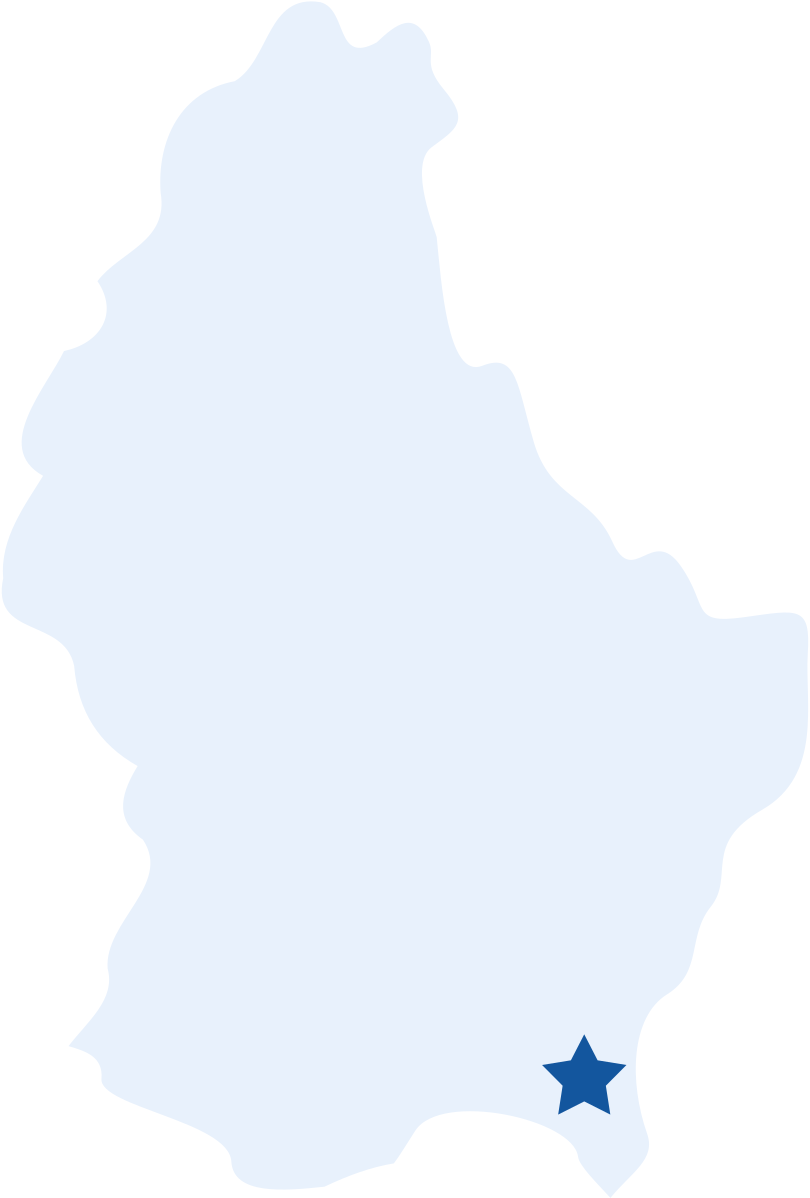
Schengen is a village of 4000 inhabitants. Why was it chosen for this important agreement? Schengen is located close to Germany and France in Luxembourg. This made the village a symbolic place to meet and agree on the border check free Europe. Today 450 million people benefit from what happened in 1985 in Schengen.
Since when can we travel without border checks in EU?
Not long ago if you crossed one border inside the EU you had queues due to severe border checks. Travelling was difficult and took time. In the 1980s, five countries (Germany, Netherlands, Belgium, France, Luxembourg) wanted to change this and signed the Schengen agreement. Some years later (in 1995) this became reality: Now we can travel free without physical controls at borders. In the next years other joined. For 30 years we can travel (almost) without border checks inside the EU – thanks to an agreement signed in a small village in Luxembourg.
Table of Contents
- 01 Key Information
- 02 Everyday Example
- 03 Good to Know
- 04 FAQ
- 05 Quiz
- 06 Summary
- 07 Links
Beispiel aus dem Alltag
📌 Imagine you live in the village of Schengen in Luxembourg, but you work nearby in Germany. Thanks to the agreement you do not have any checks when going to work. After work you can go to nearby France to shop for groceries. Again you have no border checks. This helps to save time and creates new opportunities for the local economy.
Why it happened in Schengen?
FAQ
If Schengen means to travel free, why are there checks on the borders of my country for many years?
Member countries can suspend Schengen for up to 2 years if there is a threat to the internal security. Some countries, like Austria or Germany, mention various of these threats every year. In this way, they have created permanent border checks on main roads for more than 10 years now. You stay once more in the queue thanks to the national governments. If you travel by plane, usually you do not have any checks inside the Schengen area.
Does Schengen means more crime if there are less checks inside the Area?
If a country joins Schengen, it shares its database with all other member states. Also police collaboration and communication becomes better. This helps to reduce crime and makes exchange of data of criminal people faster.
What changes if a country becomes a member of Schengen?
There are no fixed checkpoints anymore. You do not need to stop your car if you pass from one Schengen country to another. If you travel by train or by airplane, no time is needed anymore for checking all passengers' passports. This makes travelling faster and easier. Also trucks do not need to stop anymore at every single border. This manes all goods are delivered faster.
Why Schengen has nothing to do with migration and border security?
Schengen makes it easy for us to travel free inside the EU. Often some politicians say we need border checks to reduce migration and to have strong borders. Schengen makes travelling inside the EU faster and easier. It is a basic right of EU citizens. To see how the EU deals with migration, check Knowledge Bit 20 and how the EU makes our borders safe check Knowledge Bit 23.
Quiz
What does the Schengen Agreement change?
-
Explanation: Schengen works inside the EU: It makes cooperation between the police of different countries more efficient. We can travel without any border checks.
Where is Schengen, the village that gave the name of the agreement, located?
-
Schengen is a small village in Luxembourg close to Germany and France. Because it is so close to these countries, the contract was signed there in 1985.
What are the benefits of Schengen?
-
Schengen allows us to move free and without border checks inside the EU. Trucks are faster because no checks are needed on the internal borders. The EU deals with migration in other parts, see Knowledge Bit Nr. 20, How is the EU dealing with migration?
Summary
-
The Schengen Agreement makes travelling easier: No border checks mean you can reach your destination inside the EU faster and easier.
-
There are no checks for trucks anymore. Goods arrive faster and are cheaper – we benefit from lower prices.
-
Participating countries benefit from better police cooperation and shared information about criminals.