pt Back

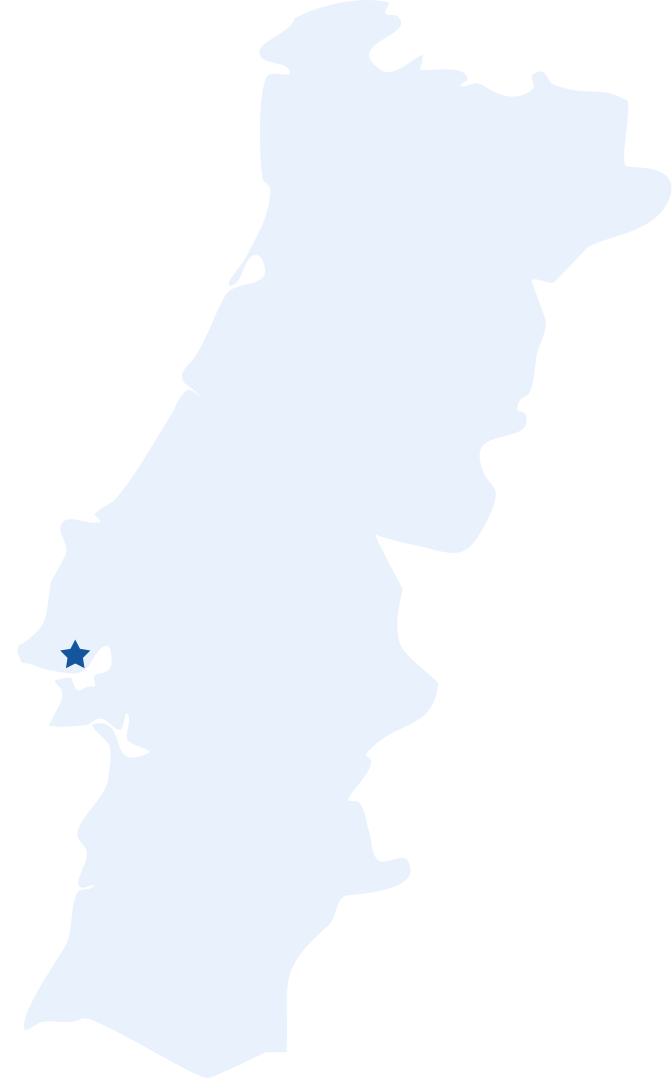
Lisbon, Portugal Treaty of Lisbon

What gives the EU its rules and powers?

The European Union (EU) is not a single country but a special partnership of 27 member states. To function in a proper way, the EU needs clear rules about what it can do, how it makes decisions, and how citizens are represented. These rules are not written in a single "constitution" like in some countries but are set out in treaties agreed upon by all member states. The most recent and most important of these is probably the Treaty of Lisbon, signed in Lisbon, Portugal, in December 2007 and came in force in December 2009. This treaty reshaped the EU by making it more democratic, more effective, and better prepared to face challenges like globalization, security threats, economical instability and climate change. Additionally, this Treaty aimed at covering the lack of a strong constitution that could make the enlargement of the EU easier. Understanding the Lisbon Treaty helps us see where the EU’s powers come from and how it works for its citizens.

Table of Contents

  1. 01 Key Information
  2. 02 Everyday Example
  3. 03 Good to Know
  4. 04 FAQ
  5. 05 Quiz
  6. 06 Summary

What is this about?

The Treaty of Lisbon is an agreement between all EU countries. It sets out the EU’s powers, responsibilities, and how it is organised.

1 / 4

Who does it affect?

Everyone in the EU – citizens, businesses, and governments – because it shapes the laws that affect the daily lives of everyone in the EU.

2 / 4

Why is it important?

The EU wouldn’t have clear rules on how to make decisions, pass laws, or protect people’s rights without this treaty.

3 / 4

Main Changes Brought by the Treaty of Lisbon:

  • Stronger Democracy
  • The European Parliament gained more power, especially in passing laws in cooperation with the Council of the EU.
  • Citizens gained the right to propose legislation through the European Citizens’ Initiative (ECI) – if 1 million citizens sign a specific petition, the EU must consider and discuss their idea.
  • Clearer Leadership
  • Creation of the President of the European Council (a fixed, renewable position) to make the EU to be more stable.
  • Creation of the High Representative for Foreign Affairs to strengthen the EU’s voice in international affairs.
  • More Efficient Decision-Making
  • Increased the use of majority voting in the Council instead of requiring unanimous agreement, making it easier to pass laws.
  • Stronger Role of National Parliaments
  • National parliaments can now check EU proposals and raise a « yellow card » if they believe the EU is interfering too much in national matters.
  • Legally Binding Rights
  • The EU Charter of Fundamental Rights became legally binding, giving citizens stronger legal protection.
4 / 4
Everyday Example

Citizens’ Initiative: Imagine a million citizens across Europe who would like to ban single-use plastics. Under the Lisbon Treaty, they can start an initiative and influence EU policy.

European Parliament: A new law on digital markets is passed only because the Parliament and the Council work together – something strengthened by the Lisbon Treaty.

Leadership: When crises like the war in Ukraine or the COVID-19 pandemic come up, the European Council President speaks on behalf of the EU, ensuring unity.

– EU Charter of Fundamental Rights legal binding: Elena from Spain applies for benefits in another EU country, like Austria, and her application is wrongly refused. She appeals, and the national court must respect her right to a fair hearing under Article 47 of the Charter. The Austrian Court of Justice cannot refuse this request.

Good to Know

Before the Treaty of Lisbon, the EU worked under several different treaties, which made decision-making slower and more complicated.

What Can You Do?

  • Explore the European Citizens’ Initiative and see which causes are being promoted. You might find one to support.
  • Follow the work of your Members of the European Parliament (MEPs) – their powers were strengthened by the Lisbon Treaty.
  • Visit Lisbon to see where this historic agreement was signed.


FAQ

Does the EU have a Constitution?
No. Instead, it is governed by treaties agreed by all member states, with the Treaty of Lisbon being the most recent.
Can the Treaty of Lisbon be changed?
Yes, but only if all EU countries agree and ratify the changes.
Why is the European Parliament more important after Lisbon?
Because it now has equal law-making powers with the Council in most policy areas, making the EU more democratic.
Does Lisbon mean the EU can make laws about everything?
No. The EU can only act in areas where countries have given it powers, like trade, environment, or competition.

Quiz

When did the Treaty of Lisbon enter into force?

  1. Signed in 2007 but entered into force in December 2009.
  2. Unterzeichnet wurde er 2007, aber in Kraft getreten ist er erst im Dezember 2009.

Which EU institution gained more power through the Lisbon Treaty?

  1. Enhanced ability to pass laws in cooperation with the Council of the EU

What is the European Citizens' Initiative?

  1. It was introduced through the Lisbon Treaty

Summary

  • The Treaty of Lisbon is the EU's main rulebook.

  • It explains how the EU makes decisions and what powers it has.

  • It gives more power to citizens, protects rights, and improves cooperation between countries.