lt Back

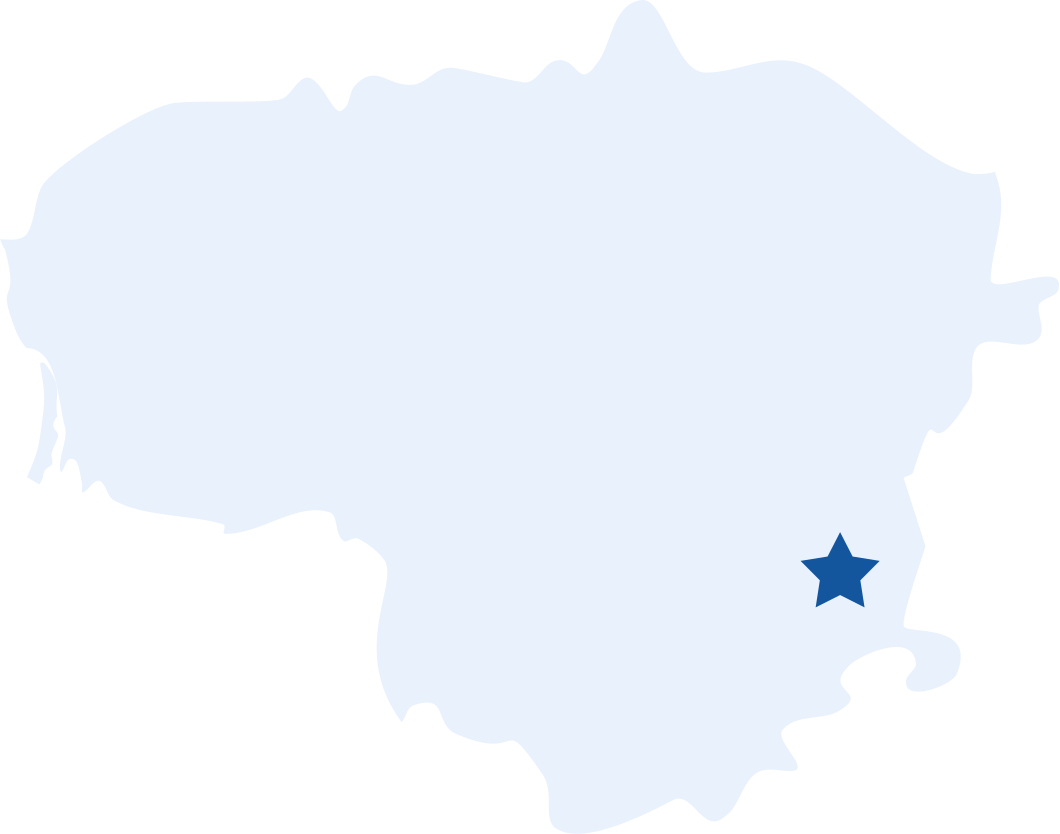
Vilnius, Lithuania Roaming Regulation

How can we benefit from free roaming due to the EU?

Have you ever worried about receiving a shocking mobile bill after a trip abroad? Before 2017, travellers in Europe often faced expensive roaming fees when using their phones in other countries. To end this problem, the EU introduced the Roaming Regulation, ensuring that people can use their mobile phones anywhere in the EU and EEA at the same cost as at home. This initiative is called “Roam Like at Home”, and it has transformed the way Europeans stay connected when travelling for work, holidays, or study.

Table of Contents

  1. 01 Key Information
  2. 02 Good to Know
  3. 03 Everyday Example
  4. 04 FAQ
  5. 05 Quiz
  6. 06 Summary

What is it?

The EU Roaming Regulation abolishes extra roaming charges for mobile calls, text messages, and data used while travelling in any EU or EEA country. It ensures that all mobile services are charged as if you were in your home country.

1 / 3

Who does it affect?

The regulation benefits:

  • All mobile users-citizens, residents, and travellers from EU and EEA countries.
  • Telecom providers, who must comply with uniform pricing rules.
  • Travellers in nearby regions, since roaming agreements are expanding.
  • The Western Balkans (such as Albania, Bosnia and Herzegovina, Montenegro, North Macedonia, Kosovo, and Serbia) have significantly reduced roaming fees when communicating with the EU.
  • Moldova and Ukraine are expected to join the ”Roam Like at Home” area by 2026, meaning that calls, texts, and data between these countries and the EU will eventually be treated the same as within the EU.
2 / 3

🟢 Beyond the EU/EEA:

  • The Western Balkans (such as Albania, Bosnia and Herzegovina, Montenegro, North Macedonia, Kosovo, and Serbia) have significantly reduced roaming fees when communicating with the EU.
  • Moldova and Ukraine are expected to join the “Roam Like at Home” area by 2026, meaning that calls, texts, and data between these countries and the EU will eventually be treated the same as within the EU.
3 / 3

Good to Know

Why does it matter?

This regulation allows Europeans to:

  • Stay in touch with family, friends, and colleagues while travelling.
  • Use navigation, messaging, and streaming apps freely.
  • Avoid hidden or surprise costs on their phone bills.
  • Strengthen the sense of a “digital single market” across Europe, promoting mobility and connectivity.

In short, it turns borders invisible when it comes to communication.

How does it work?

When you travel temporarily within the EU/EEA:

  • Your calls, SMS, and data are billed at the same domestic price.
  • Your operator applies a “fair use policy” to prevent abuse (for instance, using a SIM card from a cheaper country permanently abroad).

Example of Fair Use Policy:
If you spend four months abroad continuously, your operator may warn you that your roaming usage exceeds fair use. If it continues, a small surcharge (a few cents per minute or per GB) might apply. The idea is simple: “Roam Like at Home” is for travellers, not for permanent movers.


  • Fun facts

    • In 2014, an average week-long holiday could generate €100-€150 in roaming charges for calls, data, and messages.
    • After 2017, the average traveller saved over €500 per year thanks to the ”Roam Like at Home” rule.
    • Data usage while roaming increased seventeen-fold within two years-proving how people felt free to stay connected.
  • Did You Know?

    • Over 170 million Europeans travel each year and benefit from free roaming.
    • According to the European Commission (2023), 82% of travellers say they now use their mobile phones abroad just like at home.

    The Roaming Regulation was renewed in 2022 and extended until 2032, ensuring another decade of border-free communication.

Everyday Example

Everyday Example Imagine you live in Sweden and travel to Spain for two weeks. You call your family, post photos, and use online maps-just like at home. When your next bill arrives, you pay the same price as if you had never left Sweden.

This rule also applies if a student from Greece studies in Italy or a German business traveller works from France for a few days-no extra costs, no special activation needed.

FAQ

Can I use unlimited data abroad?
You can use your domestic data allowance, but fair use rules may limit extremely high usage. 🟢 Example: If your home plan includes unlimited data, your operator may set a data cap when abroad (e.g., 30 GB/month). After that, a small extra fee per GB may apply.
Do I need to activate something?
No. Roam Like at Home is automatic for all EU mobile customers.
Does “Roam Like at Home” apply worldwide?
No. It only applies within EU and EEA countries. Outside Europe, your operator’s international rates apply, unless special agreements exist.
Are there exceptions?
Yes. The rules apply only when you are travelling temporarily. If you move and live abroad permanently, your operator may consider that your “home country” has changed.

Quiz

Can you be charged extra for calling home while in another EU country?

Which two countries are expected to join the “Roam Like at Home” area in 2026?

What happens if you use your phone abroad for more than four months without returning home?

Summary

  • No extra fees for calls, SMS, and data across the EU/EEA.

  • Automatic application—no need to activate anything.

  • Fair use policies prevent abuse while allowing travellers freedom.

  • Western Balkans enjoy reduced fees, and Moldova & Ukraine will join by 2026.

  • Renewed EU regulation guarantees free roaming until 2032.