pl Back

Warsaw, Poland FRONTEX - The European Border and Coast Guard Agency

How does the EU protect its borders?

The European Union is an area of free movement. Thanks to the Schengen Agreement, millions of people travel, study, work, and trade across European borders every day without internal checks. But to make this freedom possible, the EU must protect its external borders and make sure that no threats are taking advantage of this freedom. Whether it’s smugglers trafficking goods, or cybercriminals targeting border systems, the EU needs to ensure its borders are secure while respecting human rights and international law. This responsibility lies with FRONTEX, the European Border and Coast Guard Agency, based in Warsaw, Poland. Since its creation in 2004, FRONTEX has become one of the EU’s fastest-growing agencies, playing a key role in managing migration, stopping cross-border crime, and saving lives.

Table of Contents

  1. 01 Key Information
  2. 02 Everyday Example
  3. 03 Good to Know
  4. 04 FAQ
  5. 05 Quiz
  6. 06 Summary

What is FRONTEX?

FRONTEX is the EU’s agency in charge of coordinating and strengthening the management of Europe’s external borders. It works with national border guards and coast guards to keep Europe safe.

1 / 3

Main Responsibilities of FRONTEX:

Border Control and Security

  • Helps countries patrol borders, airports, and seaports.
  • Provides technical support, like drones, helicopters, and modern surveillance equipment.

Managing Migration

  • Assists in processing asylum applications.
  • Ensures migrants’ rights are respected while controlling flows.
  • Helps return people who do not qualify for asylum in a safe and legal way.

Fighting Cross-Border Crime

  • Works against smuggling, human trafficking, drug trade, and terrorism.
  • Rapid Reaction Force
  • Has a standing corps of up to 10,000 border guards who can be quickly deployed when a country faces sudden pressure.

Cooperation Beyond the EU

  • Works with non-EU countries to manage migration routes, especially in the Mediterranean and Western Balkans.

Training and Standards

  • Provides training for border guards across the EU to ensure common standards and respect for human rights.
2 / 3
  • Schnelle Eingreiftruppe
    • Verfügt über ein dauerhaften von bis zu 10.000 Grenzschutzbeamt:innen, die schnell eingesetzt werden können, wenn ein Land plötzlich unter Druck gerät.
  • Zusammenarbeit über die EU hinaus
    • Arbeitet mit Nicht-EU-Ländern zusammen, um Migrationsrouten zu verwalten, insbesondere im Mittelmeerraum und auf dem Westbalkan.
  • Ausbildung und Standards
    • Bietet Schulungen für Grenzschutzbeamt:innen in der gesamten EU an, um gemeinsame Standards und die Achtung der Menschenrechte zu gewährleisten.
3 / 3

Everyday Example

Sea Rescue Operations: Ahmed, a migrant escaping war, crosses the Mediterranean on a small, unsafe boat. When the vessel starts taking on water, it is detected by a FRONTEX surveillance aircraft. A rescue ship coordinated by FRONTEX arrives, saving the passengers. They are brought to safety, where humanitarian organizations help them apply for asylum according to EU and international law.


Land Borders: Imagine Marta, who lives in eastern Poland near the Belarusian border. Every morning, she drives to work just a few kilometers away, close to the EU’s outer edge. During times of migration pressure, FRONTEX patrols work alongside Polish border guards to monitor crossings, use drones for surveillance, and ensure the border remains secure and orderly. Marta can travel freely, and trade with neighboring regions continues without fear of illegal activities. FRONTEX’s presence reassures citizens that Europe’s borders are managed with both security and humanity.

Airports: Daniel, a student from Portugal, arrives at an EU airport. FRONTEX officers support border guards using smart systems to detect fake passports. While travelers move smoothly through control, Daniel sees how technology and cooperation make travel safe and efficient for everyone.


Fighting Crime: Elena, a customs officer in Greece, joins a FRONTEX–Europol operation that stops a truck smuggling illegal goods. Thanks to joint EU action, dangerous criminal networks are dismantled, keeping communities across Europe safer.
Good to Know

Fun facts

  • FRONTEX was originally a small agency but has grown massively. Today, it has a budget of over €750 million (2022 figures).
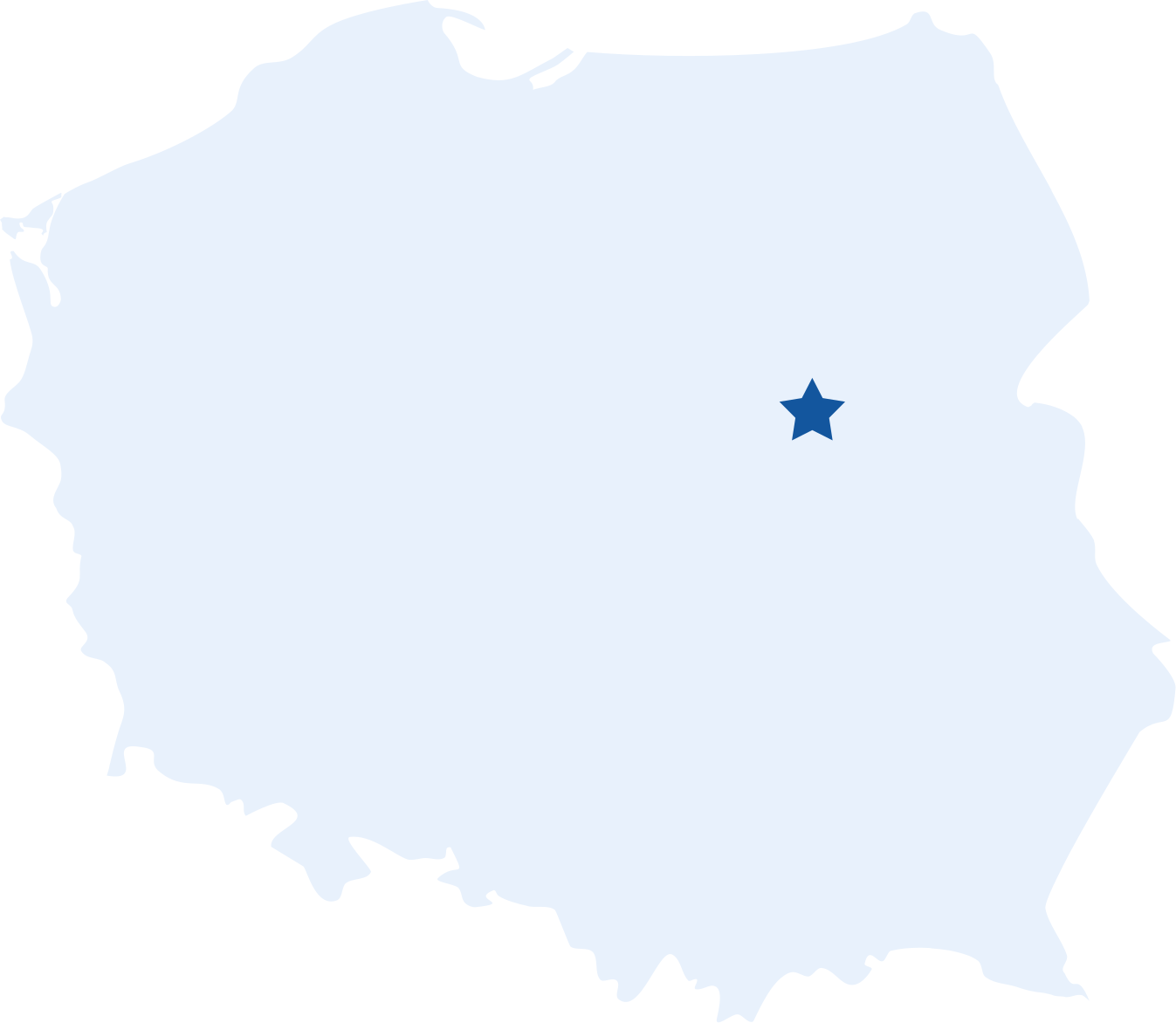
  • Its headquarters in Warsaw reflect Poland’s central location at the EU’s eastern border.
  • FRONTEX has one of the EU’s largest agencies in terms of staff and resources, with thousands of officers deployed at any time.
  • The word ”Frontex” comes from _”Frontières extérieures”_ (French for ”external borders”).
  • What Can You Do?

    • Learn about FRONTEX missions online – many reports and photos are available. 
    • Participate in debates about migration and security – they affect the whole EU. 
    • If visiting Warsaw, you can see exhibitions about FRONTEX and EU agencies. 
    • Follow FRONTEX awareness campaigns on travel safety and border security

FAQ

Why do we need FRONTEX if countries already have border guards?
Because challenges like migration, terrorism, or smuggling often cross borders and require EU-wide cooperation. FRONTEX brings resources and coordination.
Does FRONTEX only stop migrants?
No. It also rescues people in danger, supports asylum processes, and fights organized crime.
What if a country refuses help?
FRONTEX works with countries. It cannot replace their national authorities, but it can provide strong support when requested.
Is FRONTEX a military force?
No. It is a civilian agency, although it uses advanced technology and sometimes works with coast guards and police.

Quiz

Where is FRONTEX headquartered?

What else does FRONTEX do besides controlling borders?

Summary

  • FRONTEX helps EU countries protect their borders and coasts.

  • It supports with people, technology, and coordination during crises.

  • Its headquarters is in Warsaw, Poland, showing Poland's key role in EU border protection.