si Back

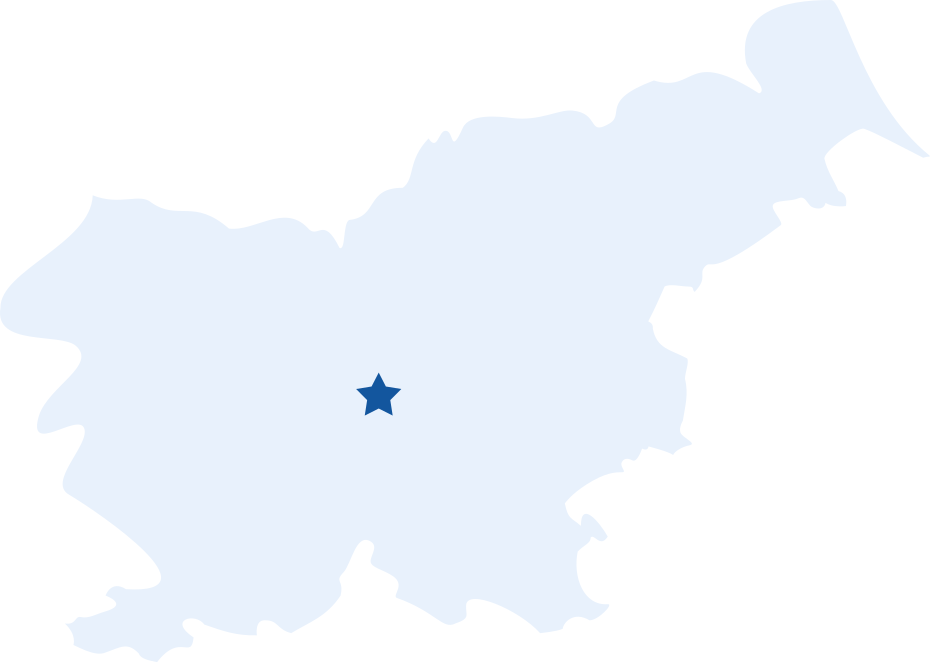
Ljubljana, Slovenia Erasmus+ Programme

How does the EU support the youth

EU youth policy helps young people across Europe to get better opportunities for education, jobs, and participation in society. Because, when young people can't find good education or jobs at home, they leave for other countries. This creates brain drain – meaning talented people leaving their home regions. It also means that some countries lose their most educated citizens while others get too many. The EU's solution is a planned youth policy – one of the most important investments in Europe's future.

Table of Contents

  1. 01 Key Information
  2. 02 Good to Know
  3. 03 Everyday Example
  4. 04 FAQ
  5. 05 Quiz
  6. 06 Summary

Since each European country handles youth policy differently, the EU can’t just make laws that everyone has to follow. Instead, they use The European Youth Strategy which is like Europe’s master-plan for helping young people. The Strategy gets all EU countries to agree on shared goals. Then each country reports on their progress. It’s like a group project where everyone works toward the same result but can choose their own way. This is also called the Open Method of Coordination.

1 / 4

Goal 1: Better Education and Jobs

Make sure young people can get good education and find decent jobs when they graduate. This means investing in schools, universities, and training programs. It also means helping young people have skills that employers actually want.


2 / 4

Goal 2: Active Citizens Who Care

Encouraging young people to get involved in their communities, help others, and participate in democracy. This means creating opportunities for volunteering, civic education, and youth organisations.

3 / 4

Goal 3: Youth Voices in All Policies

Making sure that when the EU makes decisions about anything – from climate change to digital technology – they think about how it affects young people. Young people should have a say in decisions that will change their future.

4 / 4

Good to Know

How EU Countries Work Together

Step 1: Agree on goals

All countries decide what they want to achieve (like reducing youth unemployment or increasing student mobility).

Step 2: National reporting

Each country writes a report about what they’re doing and how it’s going.

Step 3: Learning from each other

Countries share their experiences. What works in Slovenia might also work in Portugal. What failed in one place can be avoided in others.

Step 4: EU support

The European Commission helps by providing funding, research, and guidance.

Step 5: Common direction

The Council of the EU (where all countries meet) makes recommendations for everyone.

Finally

This soft approach respects the fact that each country is different, but still pushes everyone toward common goals. It’s why Slovenia can be so successful – they took the EU’s goals and found their own way to achieve them.


Everyday Example

📌 Slovenia’s Erasmus+ Success Story

Why Is Slovenia So Successful?

More Slovenian students take part in Erasmus+ (compared to the country’s size) than almost anywhere else in the EU. This is why:

  • Good organisation: Slovenia has a national agency called CMEPIUS. Think of it like a travel agency, but for education. They make it easy for students to find programs, apply for funding, and get support.
  • Smart integration: Slovenian universities don’t treat studying abroad like ”time off.” Instead, they build it into their study programs. Students get full credit for their time abroad. This means studying in another country actually helps you graduate faster, not slower.
  • Wide reach: Slovenia doesn’t just focus on university students. They also help people in vocational training, apprentices, and youth workers participate in European programs.
  • Practical support: They help students with their problems – like learning languages before they go abroad, finding extra funding, and getting their studies recognised when they return.

Strong partnerships: Slovenian schools and organisations have built good relationships with institutions across Europe. This makes it easier to find places for students to go.

FAQ

Where Does the Money Come From?
The EU provides money for youth programs through several different sources. Think of these as different pots of money, each designed for specific purposes.
Erasmus+ – The Famous One
This is the program everyone knows about. Erasmus+ funds students, apprentices, and youth workers to study, train, or volunteer in other countries. It also supports partnerships between schools and organisations. It helps create more opportunities in education and training.
European Social Fund Plus (ESF+) – For Jobs and Skills (also check KnowledgeBit 10)
This fund invests in helping people get jobs and develop skills. It pays for job training programs for unemployed workers. It supports improvements in schools and universities. It gives support to young entrepreneurs starting new businesses. It also helps people with disabilities find employment.
EU Youth Dialogue – Your Direct Voice
As part of the European Youth Strategy, the EU Youth Dialogue gives you a structured way to speak directly with policymakers at national and EU level. It runs in cycles around specific youth priorities. Young people participate in consultations, events, and meetings. These feed into recommendations for the Council of the EU. This means that your ideas don't just stay in surveys – they can influence real policy decisions that affect your life.
European Regional Development Fund (ERDF) – For Infrastructure (also check KnowledgeBit 10)
This fund builds and improves the physical things young people need. It invests in schools, universities, and youth centres. It improves digital technology and internet access. It supports innovation centres and start-up programs for young entrepreneurs.
European Agricultural Fund for Rural Development (EAFRD) – For Rural Youth
This fund specifically helps young people in rural areas. It gives start-up money to young farmers. It helps young people access land for farming or other businesses.
European Solidarity Corps – For Volunteering
This program provides opportunities for young people to volunteer, do internships, or find jobs that help communities. It works both within the EU and in other countries around the world.

Quiz

What is "brain drain"?

What is one of the main goals of the European Youth Strategy?

Why doesn’t the EU just make one law for youth policy that all countries must follow?

Summary

  • The vision: The European Youth Strategy sets out what the EU wants to achieve for young people.

  • The method: The Open Method of Coordination is a soft way to get all countries working together toward shared goals.

  • The money: Different EU funds provide the resources needed for programs and project

  • The implementation: National agencies make it all happen on the ground.

  • The results: Countries like Slovenia show that when all these pieces work well together, young people really benefit.

  • Countries with strong EU youth programs see higher youth employment rates

  • Students who participate in mobility programs are more likely to find jobs after graduation

  • Regions with good EU youth funding attract more young entrepreneurs and businesses

  • Young people who participate in EU programs are more likely to vote and participate in civic life