- The United Kingdom is the only country that has ever left the European Union. It joined in 1973 and left in 2020, after 47 years of membership.
- The European Union started with only six countries in 1957. Today, it has 27 member countries and about 450 million people.
- The biggest single enlargement happened in 2004, when ten new countries joined at the same time. Most of them were from Central and Eastern Europe.
- Joining the EU often helps countries build peace and stability. Many countries in the Balkans see EU membership as a way to keep peace and improve their economies.
- Not all European countries are part of the EU. For example, Norway, Iceland, and Switzerland are not members, but they still trade and work closely with the EU.
- EU citizens have many shared rights. They can live, work, study, and travel freely across all EU countries without needing special visas.
- Not every EU country uses the same currency. The euro is used in 20 out of 27 countries, but some still use their own national money, like Sweden or Hungary.
- Leaving the EU is very rare and takes a long time. For example, the Brexit process took more than three years of discussions and agreements before it was complete.
- Some countries have been waiting for many years to join the EU. Turkey, for example, has been a candidate country since 1999 and is still working toward membership.
What are the Accession and Exit procedures?
Joining or leaving the European Union (EU) is a big decision for any country. It’s not just about politics — it affects people’s jobs, travel, education, and daily life. Being part of the EU means sharing rules, trade, and goals with other European countries. It also means working together to protect peace, the environment, and human rights.
If a country joins, it must make big changes to meet EU standards — like improving democracy, justice, and the economy. If a country leaves, it must rethink how it trades, travels, and cooperates with its neighbors. Both joining and leaving take time, planning, and careful negotiation.
That’s why the EU has clear rules for how this happens. These rules help make sure everything is done fairly and calmly, without causing confusion or harm to people and businesses.
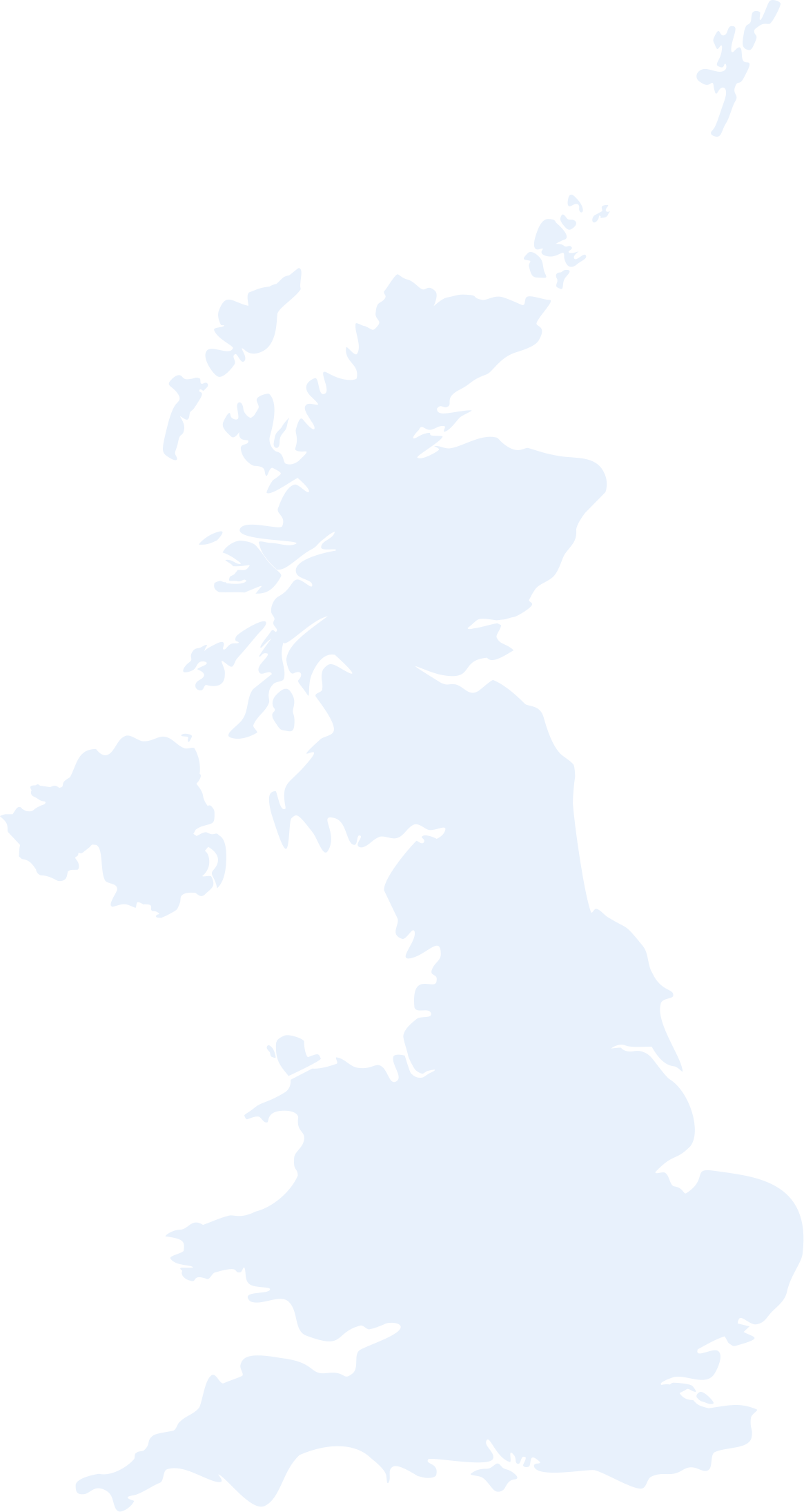
A major recent example is the United Kingdom’s withdrawal from the EU (Brexit). After nearly 50 years of membership, the UK voted in 2016 to leave, officially exiting on 31 January 2020. Brexit demonstrated just how complex and far-reaching withdrawal can be:
Trade and Economy: The UK had to renegotiate trade relationships not only with the EU but with the rest of the world. New customs checks and border rules affected businesses, especially those relying on fast supply chains.
Citizens’ Rights: Millions of EU nationals in the UK — and UK nationals living in the EU — needed legal guarantees to protect their residency, healthcare access, and work rights.
Borders and Peace: The border between Ireland (EU) and Northern Ireland (UK) became a central issue. Special arrangements were necessary to avoid creating a hard border that could threaten the Good Friday peace agreement.
Regulation and Standards: The UK had to decide which EU rules to keep, change, or discard — affecting sectors from agriculture to data protection.
Brexit revealed that leaving the EU is not simply “walking away.” It requires years of negotiation, detailed legal agreements, and careful planning to avoid economic shocks or uncertainty for citizens.
On the other hand, countries like Ukraine and Serbia are working hard to join the EU, showing that membership is still something many nations want.
In short, the EU’s accession (joining) and exit (leaving) procedures matter because they help countries change their path safely and peacefully, while protecting people, stability, and cooperation across Europe.
Table of Contents
- 01 Key Information
- 02 Everyday Example
- 03 Good to Know
- 04 FAQ
- 05 Quiz
- 06 Summary
Everyday Example
Croatia’s Accession (2013)
Croatia applied in 2003 and became an EU member 10 years later after deep reforms in justice, human rights, and economic policy.
Brexit (2020)
The UK left the EU after 47 years. Negotiations lasted several years and covered trade, citizens’ rights, and the Northern Ireland border — proving that leaving can be far more complex than joining.
Ukraine’s Candidacy (since 2022)
Ukraine was granted EU candidate status in 2022. Its path to membership involves major reforms in governance, anti-corruption, and the economy.
Good to Know
What can you do?
- Learn about candidate countries applying to join (e.g., Ukraine, Serbia, Montenegro).
- Explore how Brexit changed travel, trade, and study opportunities for UK and EU citizens.
- Compare the benefits and challenges of EU membership.
FAQ
Can any country join quickly?
No. Joining takes years because countries must meet EU standards on democracy, law, and the economy.
Did Brexit mean all ties with the EU ended?
No. The UK still works with the EU on trade, security, research, and travel - but it lost its seat and vote in EU institutions.
Could another country leave soon?
Possible, but not likely - most countries see more benefits in staying than leaving.
Quiz
Which article of the EU Treaty covers leaving the EU?
Summary
-
Accession (Article 49) and Exit (Article 50) are the EU's official procedures for joining or leaving.
-
These rules protect fairness and stability for citizens, businesses, and governments.
-
Brexit is the best-known example of an exit, showing the challenges and impacts.